“When you get to challenging conversations, you will be listened to”: in-house advice from the National Trust legal leader
There are nuances to working in-house – from juggling varied fields of expertise to grappling with ‘quick requests’ to answering legal queries on your tea break. Hilary Watts, GC at the National Trust, shares why she believes people skills and pragmatism are essential to success.
Nature, beauty and history have kept me at the National Trust for 21 years.
I’ve always loved feeling part of the conservation charity and membership organisation. I like that I never know quite what’s going to cross my desk.
I still believe in the cause. It sounds corny, but it’s true. We need the spaces we look after for future generations, for our wellbeing and our own existence.
The National Trust is governed by its own Acts of Parliament. Many of our properties and land, we hold ‘inalienably’. It’s a promise to the nation that we will hold it forever.
The organisation can still lease that land and put it to good use but can’t sell or transfer it.

Hilary says, “We need the spaces we look after for future generations, for our wellbeing, and our own existence”.
The capacity challenge
Our legal team has 20 lawyers, a mixture of full- and part-time from property, litigation, commercial and financial backgrounds.
We’re supported by a small team of support staff.
The biggest challenge we face as a legal team is capacity. As a charity, we’ll always have more to do than we can manage.
Charity budgets will always – quite rightly – be kept tight because we are there to deliver on our charitable purpose.
As a team, we cannot do everything. The breadth of work means I must be very clear about our priorities and take a pragmatic approach.
We can’t always aim for a 100% perfect solution in every case.
Experience teaches how you manage risk and how to get the appropriate solution for the organisation at the right time.
We have a business partner approach. When engaging with clients, each lawyer decides whether they can support directly on an issue, transfer to a different lawyer in the team or if we need external counsel.
We’ll usually only bring in a firm if we have a capacity issue, need deep expertise or if there’s a very high risk.
Building relationships
You might need to use your people skills a little differently if you’ve moved over from private practice.
When you work in-house, you might hear, “Can I just grab you for a second?” from a colleague with a legal query at the tea point or in the car park.
Understanding stakeholders’ communication preferences and nurturing trust is crucial.
A challenging conversation becomes even more challenging when it involves someone who you don’t have a decent relationship with.
That doesn’t mean you always have to agree with people or be their best friend.
But it does mean you’ve got to build good relationships so you’re a trusted adviser, and they understand and value what you’re bringing to them.
Laying the groundwork for that involves being proactive, engaging with people’s problems and coming up with solutions to help them do their job more effectively.
When you then get to those challenging conversations, where you might need to say, “I really don’t think we should be doing that”, you will be listened to.
Property law, conservation and nature
All in-house lawyers are generalists. You might focus on different things at certain times, but you must also work across such wide areas.
As a conservation charity we are a landowner, we’re a landlord, a visitor operation, a retailer, a cafe operator, we operate a holiday business, we’re a fundraiser, we’re an employer.
At the National Trust, we cover all aspects of property law. As a major landowner, we do lots of acquisitions – anything from a coastal strip to countryside or a historic building.
We might be dealing with rights of way over our land, legalities around conservation activities on commons or restrictive covenants.
People don’t often realise we have a lot of residential property. We’ve got 10,000 tenancies and tenants so there’s lots of work focusing on that: agricultural, commercial and residential leases.
But our scope is much wider than property. Most people don't think about our commercial arrangements – contracts, partnerships, fundraising, philanthropy, even charity finance.
Our work also quietly underpins environmental and sustainable projects across the business.
Woodland creation might include dealing with grants, and agreements with landowners.
The legal team might help with peatland restoration: forming agreements with partners.
Many acquisitions are for a nature benefit or a built heritage benefit.
It might be a coastal strip, or the countryside.
Nature is constantly changing – we are dealing with conservation issues that move across landscapes.
For that reason, we often acquire a piece of land to connect other land together.
Caring moments
In our weekly meetings, we encourage everyone to bring what they’re working on.
But we also want them to share questions or lessons they’ve learned – things like, “Does anyone know the best way to approach this?” or “If I were doing this again, I’d do it like that.”
The team really supports one another. When you just want to put the phone down and let out a big sigh, they provide a safe space for it.
If I’m on back-to-back calls, somebody will come and put a cup of tea on the desk for me.
They really are the antidote to pressure and stress. They do a cracking job.
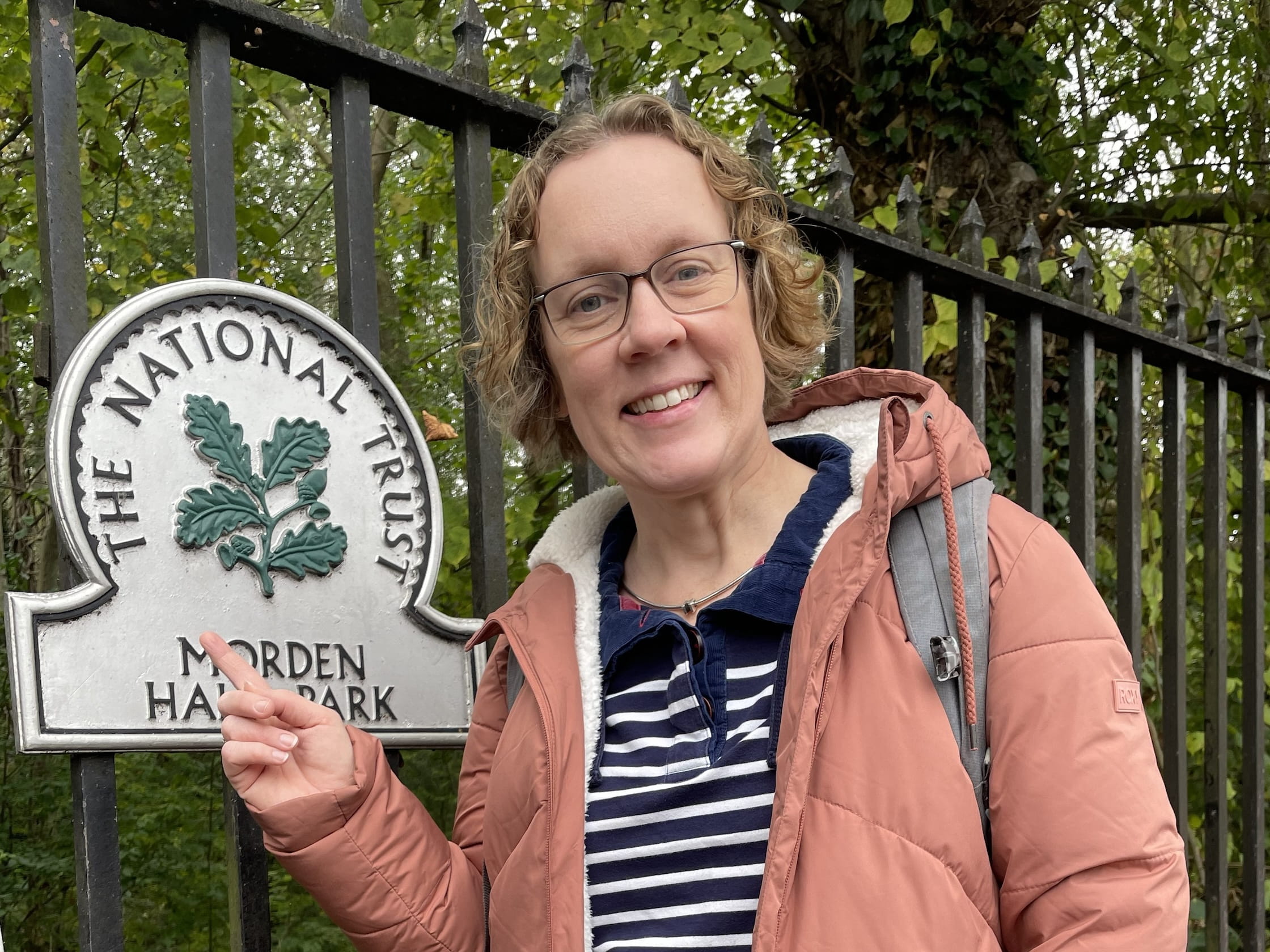
Hilary at National Trust site, Morden Hall Park.
A constant in uncertainty
There’s something reassuring about the National Trust’s permanence.
In a world that’s ever-changing, and quite worrying at times, you can go somewhere that is still as it was and will still be as it was in the future.
Every National Trust site is my favourite. It’s what you say about your children, isn’t it?
But if I had to pick one, it would be Croome Court in Worcestershire. It is my go-to with my husband and kids.
I worked on its acquisition, so I feel strongly connected to it.
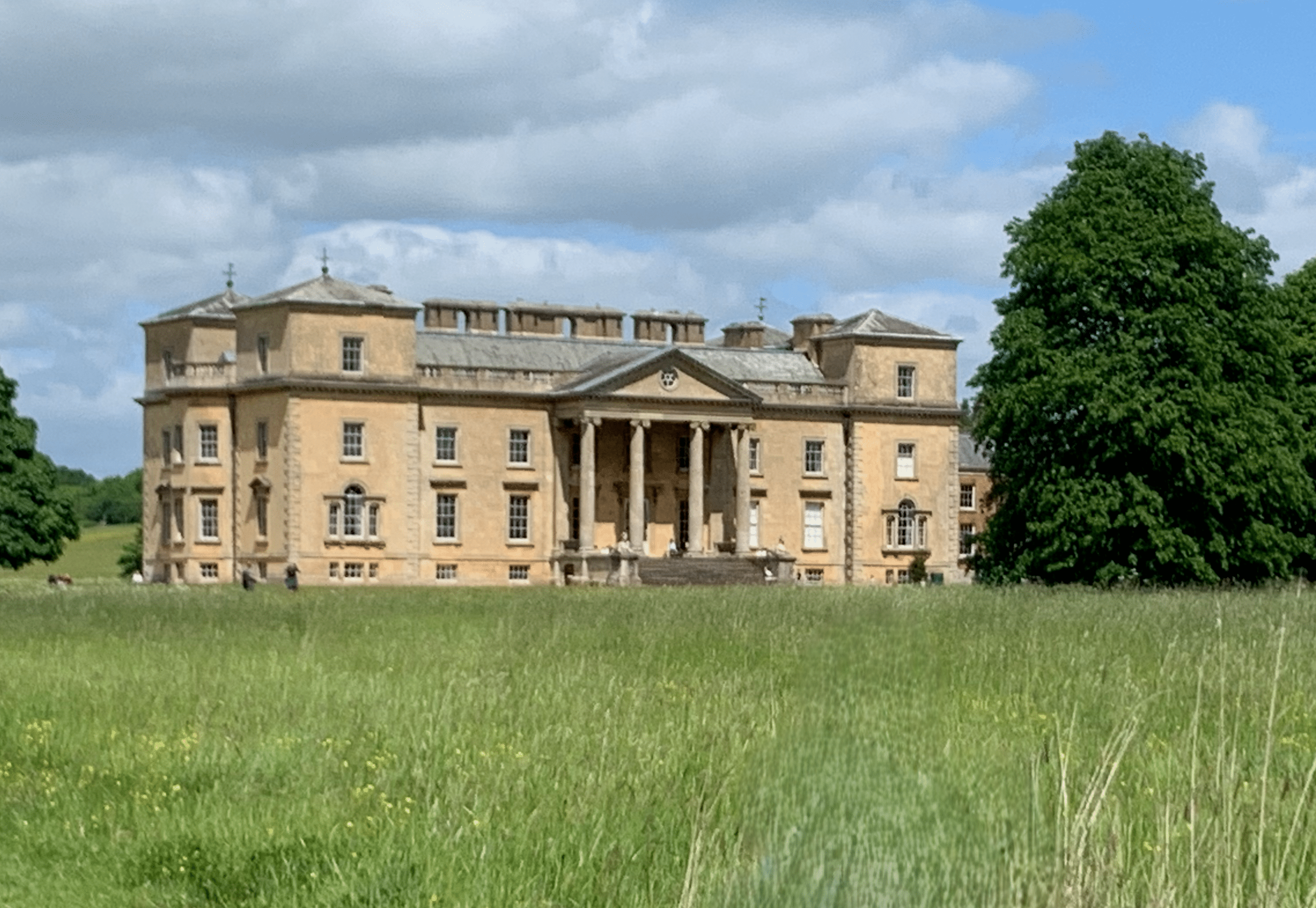
Croome Court, which Hilary says would be her favourite National Trust site if she was allowed to pick just one.
When I’m standing in one of our places, seeing families’ reactions to the stories – from toddlers to grandparents – it gives you a real kick.
Even working on a cold, wet winter morning, it still fires me up. It gets into your soul, I suppose.
Join our in-house community
Our In-house Network provides support and advice on key issues facing all in-house lawyers, working in the corporate and public sectors, not-for-profit organisations and charities. Join today.
In-house ethics framework
This ethical practice framework provides practical guidance, tools and resources to help in-house solicitors uphold their ethical and legal obligations while operating effectively within their organisations.