“I know what you’ve been through. You’re in good hands”: life as an immigration lawyer
My path to immigration law
As a child in a refugee camp, I had to grow up very quickly.
We lived there for around six months until they found us permanent housing. We had to keep our guard up at all times. It was very difficult.
Contrary to what some media portray, it wasn’t a nice environment.
Not knowing the language, not knowing the people, not knowing where your community is, not knowing who to trust. We were left to our own devices.
That experience is ingrained in me and it’s why I practise immigration law. I can say to my clients, “I know what you’ve been through. You’re in good hands.”
You can change someone’s outlook in 30 minutes. I just want to assure my clients that they’re not alone.
Being my own boss
 I never thought I would start my own firm – although my grandfather had always said it’s better to make one pound working for yourself than £1 million working for someone else.
I thought, “with my lived experience and my professional experience, I can set the tone of my business in the way I want, and hopefully create my own legacy”.
I've worked in many law firms and I've gained a lot of experience. I have taken knowledge and nuggets of wisdom from each one.
Life is extremely busy when you’re running your own firm.
I have to do everything – even the printing. Accounting, casework, speaking to the clerks, posting letters.
It’s a lot of pressure. But it’s also very rewarding. Everything feels special to me – even my company pencil case.
I have to be careful as a one-man band because I can’t take on every case – at least, not until I have some paralegals.
My goal for my firm is to have different branches around the country, with many people working together who share the same vision.
My mum is my superhero
I studied law to make my mum happy. My mum is my number one fan! She’s a very strong individual. Whenever I’m feeling down, I talk to her.
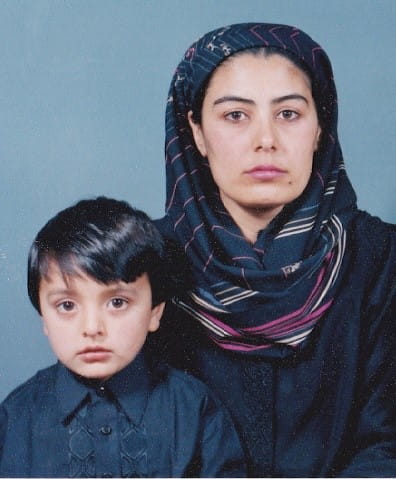
I hated my law degree. I’m not an academic person, I’m very hands-on. I got a 2:2 and failed my public law module in the first year and had to re-do it.
But I loved the Legal Practice Course (LPC). Your life isn’t over if you don’t do well in your degree!
When I did a module in immigration, we were reading a bit of case law and I thought, “This is basically what happened to me.” I thought, “This is what I want to do”.
I must have applied for a training contract at about 500 firms up and down the country. Nobody would take me on, but I didn’t give up.
Finally, SBG solicitors gave me a shot and I started as a paralegal in criminal law – although I didn’t like criminal law much.
I went on to do immigration law at Duncan Lewis, and the rest is history.
Stepping into my client’s shoes
It takes a lot of time to build a rapport with clients and for them to open up to you, especially victims of trafficking who don’t disclose much to you.
Many of my clients haven’t yet spoken to someone who has put them at ease.
It’s not just about me writing their statement and sending it to the Home Office. It’s about listening to them and the struggles they’re dealing with right now.
I’ve been through it myself and there’s a lot of running around, finding a solicitor, finding housing, finding this, that and the other.
Being able to speak Dari with my Afghan clients is so useful because many words get lost in translation.
I can sense the relief they feel. They're like, “It’s just like I’m in Kabul having a coffee with my friend.”
Recently, a person came to me because they had been refused leave to remain in the UK six times in court.
He had lived in the UK for 17 years and had more than four fresh claims refused.
It was one of those cases where you think, “This is not going to go anywhere.” But the man was begging me to take on the case.
The client’s fresh claim was refused immediately, which I was expecting.
But then we went to court, and we found out a few months into 2025 that his appeal was allowed – 18 years after being here. He was so happy.
In immigration law, you can’t guarantee a win, but you have to be strong and hopeful for your clients.
Even if they do get refused, you’re someone they can lean on. They’re living on hope. So why can’t we be hopeful too?
Inspiring others

I’d say to anyone who feels like the odds are stacked against them, you are stronger than you think.
Seeing someone who looks like you sharing a success story is so important.
I didn’t have that growing up.
I hated social media, but I joined it because I wanted to shift the narrative in the mainstream media about how asylum seekers are perceived.
I wanted to inspire others and say, “Don’t look at that. Look at what I’m doing – you can do it too.”
I’m an asylum seeker, I’m a person of colour and I’m a solicitor.
I just want to make a positive change. In this grim and dark world that we live in, I’d like to be a flashlight.
Ready for the next step in your legal career?
Search the latest legal jobs in the UK and internationally on Gazette Jobs – brought to you by the Law Society’s official magazine.