“Change is the hardest thing to do in business”: innovation and evolution in law firms
When my brother and I set up Taylor Rose, we started out with lofty ambitions – we wanted to change the business of law.
We were in the early stages of our careers, and were looking to break some of that hierarchy and structure that we all have wrapped around us.
I don’t know how we ever thought we’d do as much as we did.
Our firm began as a small group of litigators and small property-focused lawyers, looking to set up on their own, who navigated the many procedural and regulatory hurdles necessary to setting up your own law firm.
As we established ourselves and grew, we started to think about an alternative scalable solution, where lawyers could work within our framework and regulated structure, but with an element of self-reliance and self-employment.
A real alternative to equity partnership, that evolved into a massive opportunity that shaped our firm and became 70% of our business now.
Our firm’s ethos is ‘smart modern law’. To this day, we see ourselves as industry challengers.
The traditional partnership model in legal services is very strong, but there is space out there for other models.
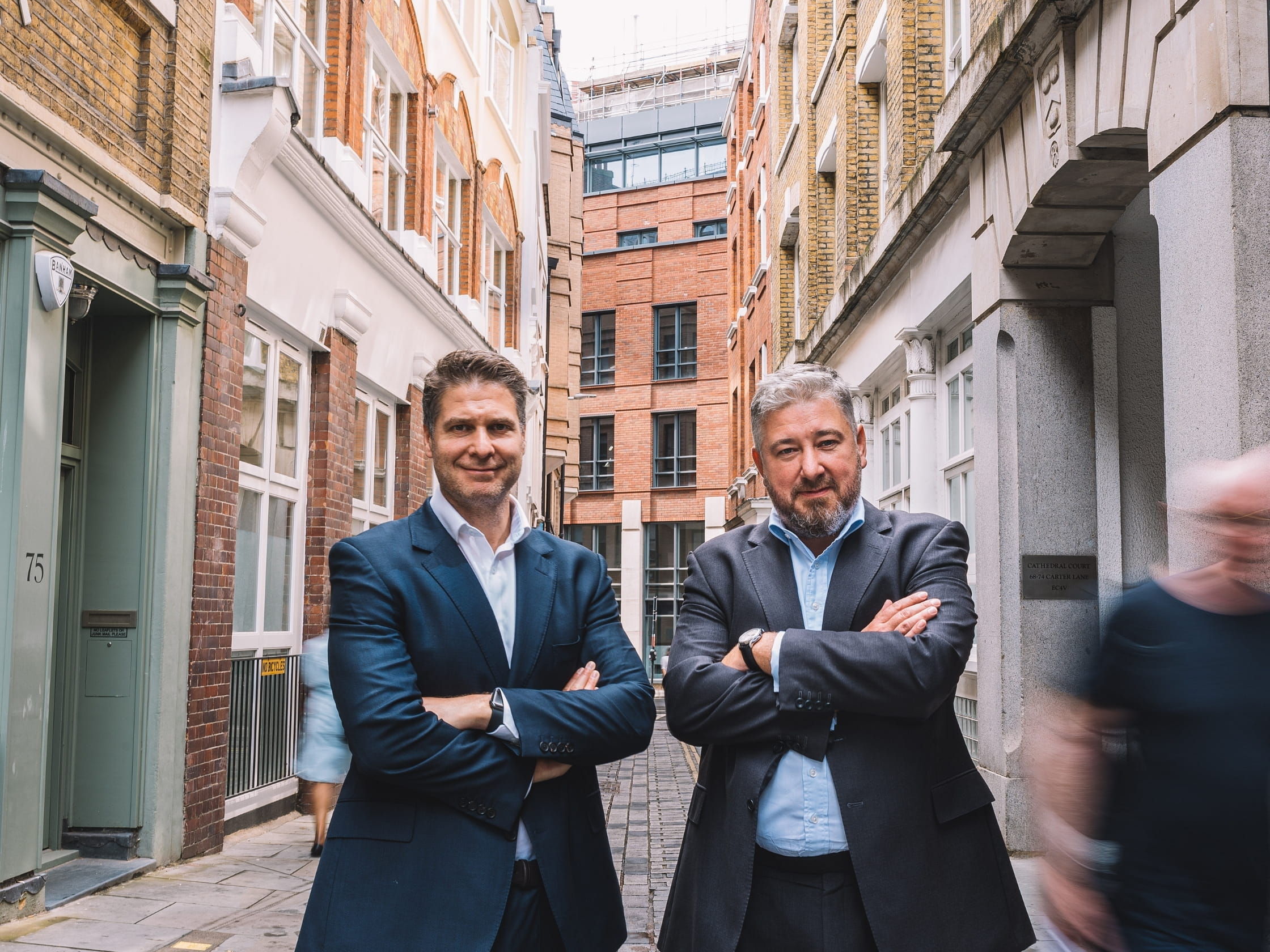
Adrian, with his brother Antony.
We’re trying hard to create a supportive platform around the lawyer that enables them to be as efficient and forward-leaning as possible.
We operate a narrow and empowered management structure. Even as CEO, I don’t have a desk. I’m a nomad with my laptop, bouncing between offices and sitting amongst colleagues.
There’s an informality amongst our senior management team that might surprise people.
We’ve worked together for a long time, we’re friends. We still have a laugh and take the mickey out of each other.
That familiarity and trust in these long-term relationships is fundamental. As my brother and I sit on the board, there’s inevitable banter.
The way we communicate with each other creates a very down-to-earth working culture. We come together when we face challenges.
We’re not necessarily looking to do things ahead of the market. But we often want to do things in a different way to the market.
I stumbled into law by chance
I sit amongst people at Taylor Rose who’ve wanted to be lawyers from an early age. That’s their vocation.
I sometimes feel a little embarrassed because that wasn’t the case for me.
I’m dyslexic and had a mediocre output at school. Dyslexia wasn’t really recognised back then, so it held me back.
I’m not from an academic family either – my dad is a retired mechanic.
I stumbled into a legal costs position at a local law firm by pure chance, because there was a job available as part of a training programme.
I immediately took to it. The work unleashed a new capability in me that I didn’t know existed before then.
I went on to set up my own legal costs company, Jaggards, with my brother, Antony – personal injury lawyers out there may have heard of it.
I was in my mid-20s at this point, running a business of around 100 people, with a delegated-authority insurance spend of £250m.
Our early success gave us confidence to strive for more – a different place to when we left school.
When legislative changes limited the scope of Jaggards’ services, we had to pivot. Antony decided to become a lawyer.
I thought, “If he can do it, I can do it!” The next step was starting our own firm – Taylor Rose.
It was weird being a trainee solicitor and an SRA-approved equity partner at the same time. It was a random situation.
The SRA website didn’t know what to do with me! It didn’t know whether to call me a trainee solicitor or a member partner. My supervising partner was non-equity, so technically I was his boss.

Adrian and Antony as young men.
It was difficult because I also had all the responsibilities of running the business.
I was married with young children, taking a lot of time out to study in the evenings and weekends for about four or five years.
For a long time, the legal services industry didn’t reflect the composition of people it was serving. That’s all changing now – and it had to change.
We are such a diverse firm. I don’t just mean that in terms of gender and ethnicity, but also in our journey to law and thought processes as a result.
Because of the entrepreneurial spirit of our business, we naturally attract people who come from all sorts of backgrounds and roll their sleeves up.
Our consultants are embedded in their communities. To me, this approach feels much more real and powerful than a centrally-engineered initiative.
Making innovation a reality
The success of our business comes from having an inquisitive nature; a readiness to challenge how we do things and evolve.
It’s really, really tough making changes. It’s the hardest thing to do in business.
Most of the time you don’t know the outcome, you predict a likely outcome.
And there’s always an offset, there’s always cost, there’s always compromise.
You’re taking something known and trading it for something unknown. It provokes questions and you question yourself.
Whenever there’s a low point just after the change and it’s not yet working, you must have conviction in your original thought process and just keep going – working alongside people in your business who have grit.
Around 10 years ago, after a series of mergers and acquisitions, we found ourselves with the ‘smart modern law’ tagline that fits us well to this day.
The only challenge to this was, ironically, a complex legacy IT infrastructure that couldn’t keep pace with our innovation needs and growth.
For a while, we were scared to innovate due to the complications and risks.
In the end, changing almost every single piece of technology to one platform – pretty much in one go – was the only way out of that.
That was a radical move because we had to upend not just the stuff that wasn’t working, but a lot of stuff that was. It took a clear vision and lots of confidence.
My experience in business guides me to not try to tackle everything – you can let some opportunities go by and not get too wound up by those you’ve missed.
There will always be more, some small and some large.
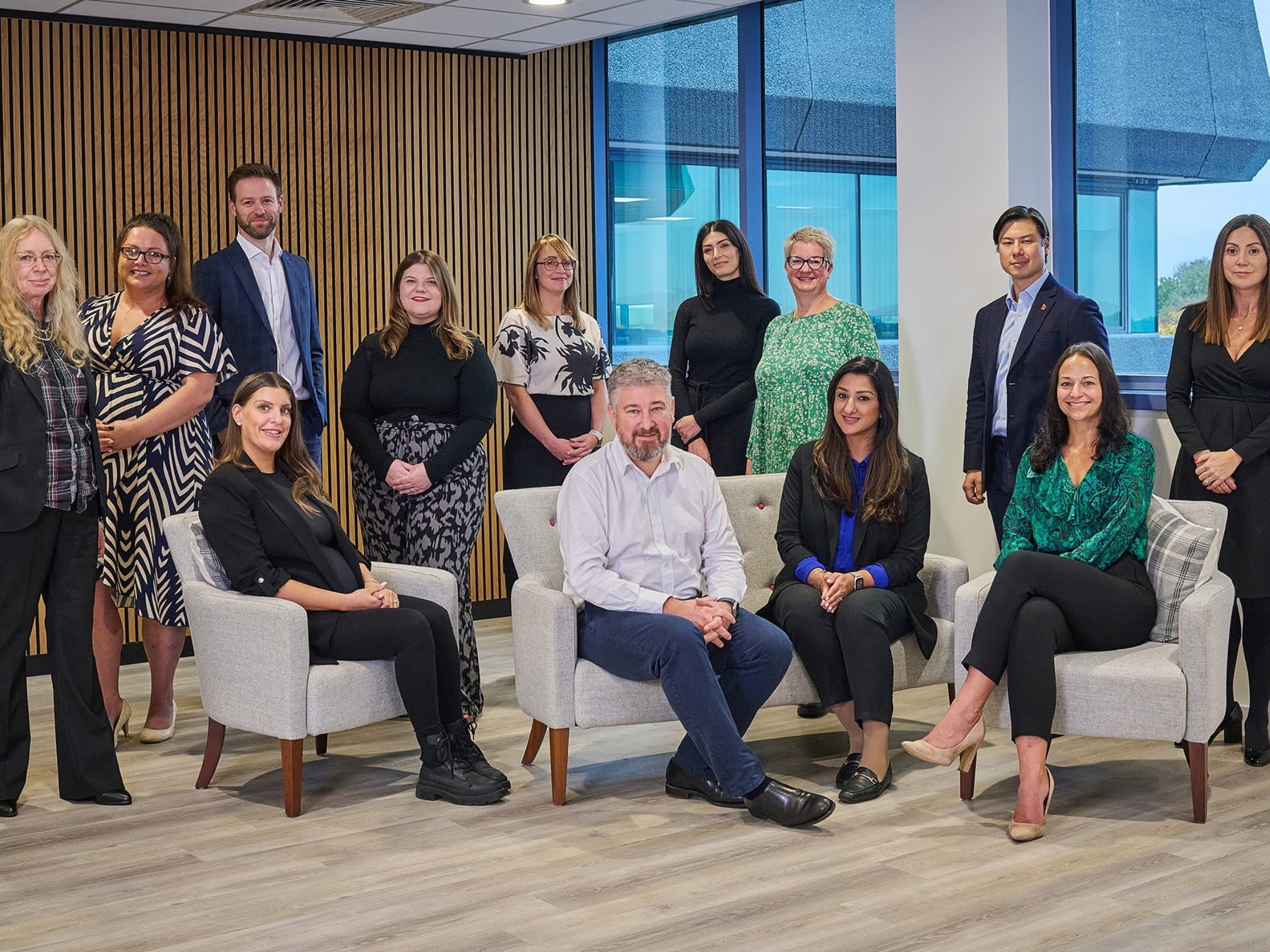
Adrian with colleagues at Taylor Rose.
The future of legal services
Technology is at a pivotal point in legal services.
We believe that AI will act as a security blanket around our lawyers, working in the background and partnering with them in a non-intrusive way. It can ensure that things don’t get missed in a way that we as humans can’t always manage.
It’s about using AI to almost create ‘lawyers with superpowers’.
The legal services market in England and Wales is very fragmented. Whether you’re a small, a mid-size or a large firm, I think we’re all trying to navigate market consolidation.
Looking forward, I see more of the same consolidating trend. I think law firms will get bigger.
We might see a polarisation of success, where larger firms and those who aren’t paying out all their profits are able to reinvest and improve their capabilities and services. That’s something we’ve always done under a corporate structure, rather than a partnership.
As a result of consolidation, the capability gap will grow, fuelling more growth, consolidation and investment, in an accelerating circle.
That’s my prediction, albeit acknowledging the pain inflicted on the many law firms falling away.
I’ve still got so much more to learn. As CEO, you’ve just got to try and resist cementing your mind into a way of work.
You try and keep it open – to allow that entrepreneurial activity to flourish in a safe way.